Custom carbide pins for locating, guiding, forming, and wear applications
Extramet Products manufactures carbide pins for equipment that needs better wear resistance, tighter size control, and longer service life than conventional materials can provide. A useful pin quote connects the drawing to the real wear problem: how the pin locates, guides, contacts, forms, or supports the surrounding equipment.
Send diameter, length, end geometry, tolerance, surface finish, grade direction, contact material, quantity, and how the current pin is wearing or failing. Extramet can review whether the project needs material only, a grind-ready blank, or a finished carbide component.
Buy carbide pins with the application in mind
Carbide pins are not just small round parts. They often control fit, alignment, movement, or contact in a larger assembly. If a steel pin loses size, galls, bends, wears a flat, or creates downtime from frequent replacement, carbide may be worth reviewing.
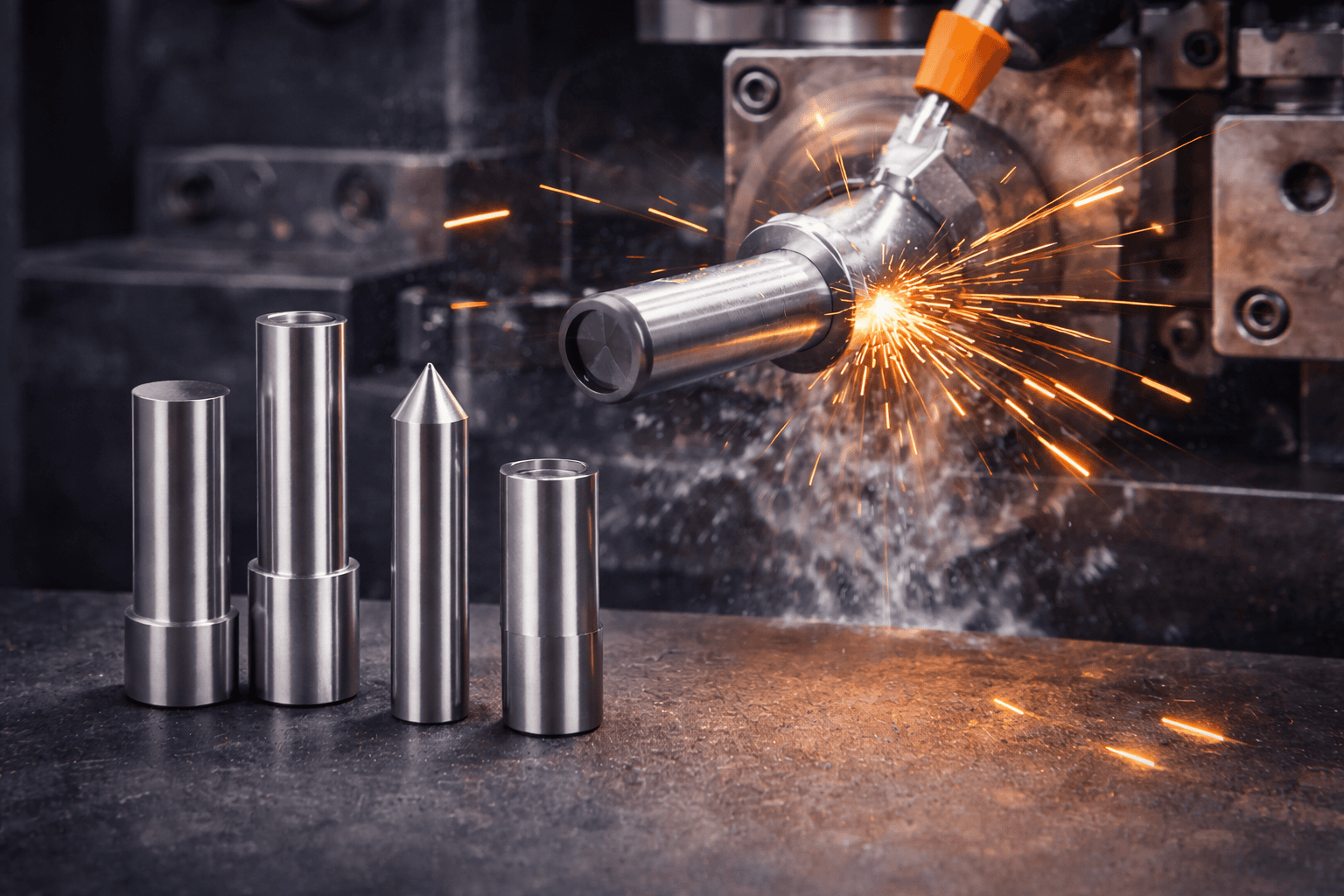
Extramet can help with new pin programs, replacement pins for existing assemblies, locating pins, guide pins, wear pins, forming contact pins, and custom pin shapes. The best recommendation depends on wear mode, impact, geometry, finish, and whether the pin is supported in the assembly.
Where carbide pins are used
Tooling
Progressive dies, transfer dies, forming tools, heading tooling, and fixtures where the pin must hold position through repeated cycles.
Automation and fixturing
Wear pins, alignment pins, datum pins, and guided-motion components where repeatable location matters.
Wear parts
Contact points where hardened steel loses tolerance, wears undersize, or changes the fit of a production assembly.
Precision grinding for repeatable fit
Fit is everything with pins. Diameter, straightness, length, end condition, and surface finish can decide whether a carbide pin performs well in the assembly. Long round parts often route through centerless grinding, while pins with shoulders, steps, or more complex features may need cylindrical grinding or additional manufacturing review.
Grade selection that matches real use
Wear life improves when the grade matches the job. Some applications need maximum abrasion resistance, while others need more toughness for impact, side load, or edge loading. Use the Carbide Grade Selector Wizard to organize the application details, then validate the result with the drawing and service conditions.
Tungsten carbide pin specs that affect fit and wear life
Pin performance usually depends on fit, support, contact, and finish. A strong RFQ separates locating pins, guide pins, wear pins, forming pins, and replacement pins so the team can review the right grade and grinding route.
Locating or guide pin
Include: OD tolerance, length, straightness, end condition, finish, and mating component.
Review focus: Repeatable fit, alignment, and centerless grinding path.
Wear or contact pin
Include: Contact material, wear pattern, load, speed, lubrication, and current material.
Review focus: Grade, hardness, toughness, and surface finish.
Forming or custom pin
Include: Drawing, shoulders, radii, chamfers, profile features, and inspection requirements.
Review focus: Cylindrical grinding, feature control, edge protection, and inspection.
Common pin quote inputs
- Diameter, length, end detail, chamfer, radius, shoulder, or custom geometry
- Tolerance, finish, straightness, critical features, and inspection notes
- Current material, grade preference, contact material, and wear pattern
- Quantity, delivery target, and whether material is supplied by Extramet or by the customer
Carbide pins FAQ
Can I request pricing without a drawing?
Yes. A drawing is best, but a simple message with size, function, contact material, and wear problem is enough to start the conversation.
Do carbide pins last longer than hardened steel pins?
In abrasive or sliding wear applications, carbide pins often hold size and geometry longer than steel. The best choice depends on wear mode, impact, finish, and how the pin is loaded.
What types of carbide pins does Extramet support?
Extramet supports locating pins, guide pins, wear pins, forming-contact pins, replacement pins, and custom pin shapes based on the assembly or tooling need.
Can Extramet help with grade selection?
Yes. Grade selection is reviewed against wear resistance, toughness, geometry, contact material, and operating environment.
Related carbide components
If the pin is part of a larger tool set, Extramet may also review carbide punches, blanks, or related wear components at the same time. Connecting the related parts early can make the quote cleaner and reduce follow-up questions.