Custom carbide punches for stamping, forming, piercing, and wear tooling
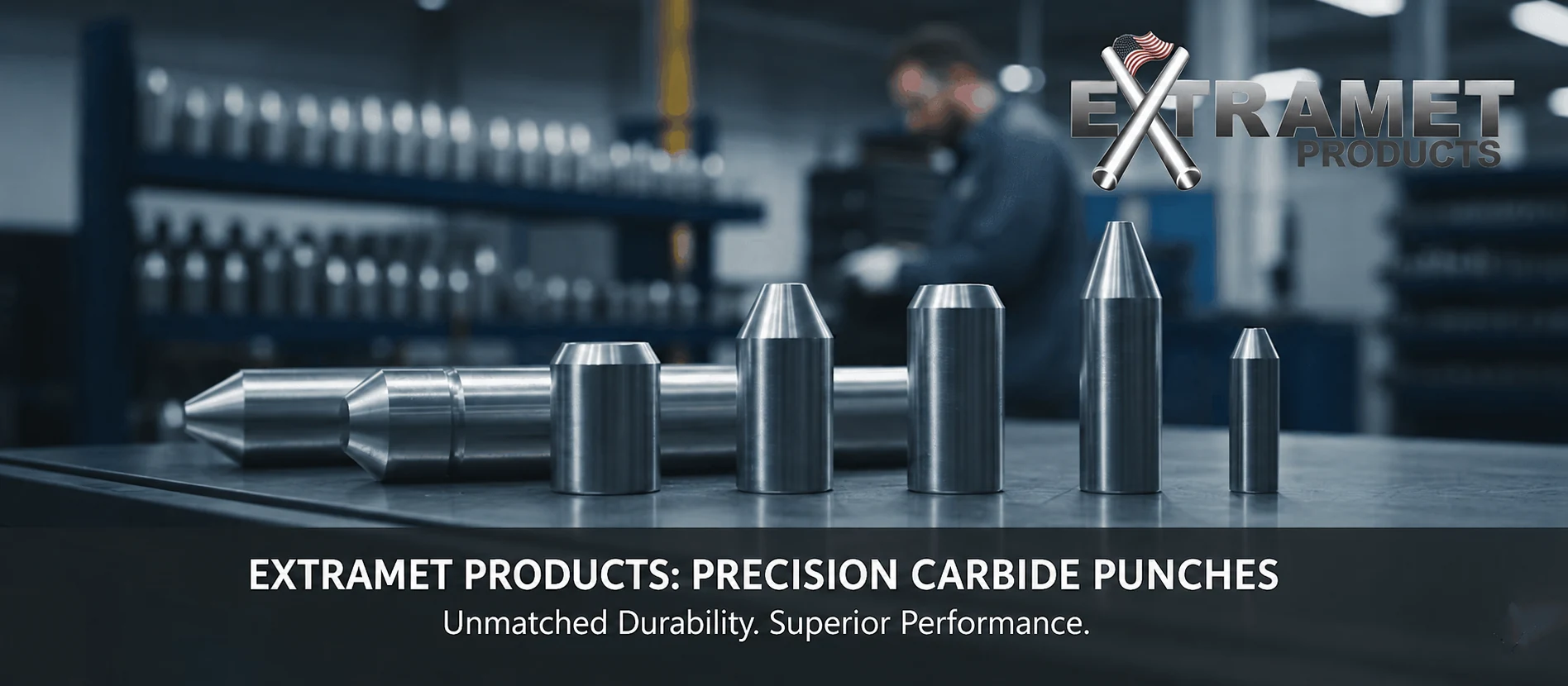
Extramet Products manufactures carbide punches for production environments where steel wears too quickly, dimensions drift, or repeat contact damages the working edge. A useful punch quote reviews geometry, grade, edge condition, support, finish, and the material being formed or pierced.
Send the drawing, working length, shank or head detail, radius or chamfer, tolerance, finish, quantity, and current failure mode. The team can review whether the issue is likely grade selection, geometry, unsupported length, finish, or the production conditions around the punch.
Built for the realities of production
Carbide punches can maintain sharp edges and dimensional stability longer than many steel alternatives. The value is not only hardness. The punch still needs the right grade, edge design, finish, support, and geometry for the actual load profile.
If the current issue is excessive tool changes, inconsistent part quality, cleaner-hole requirements, or repeated edge wear, include that production history with the print.
What matters before production
Edge and radius details
Small geometry changes can affect wear, chipping risk, and finished-part consistency.
Grade and toughness
The right grade balances hardness with the impact level the punch will see in service.
Inspection expectations
Critical features, tolerances, and finish notes should be clear before grinding starts.
Common punch applications
Carbide punches are used for stamping, piercing, blanking, trimming, forming, progressive die tooling, punch-and-die sets, abrasive work materials, and production tooling where edge quality and repeatability drive part performance.
Best fit for
High-cycle production, abrasive work materials, progressive die tooling, precision stamping, and programs where edge wear or dimensional drift creates downtime.
Typical operations
Piercing, blanking, trimming, forming, cutting, punch-and-die sets, and production tooling where repeatability matters.
Custom carbide punch manufacturing
Extramet manufactures custom punches to drawing requirements, including round, square, and profile geometry, edge details, polished finishes, tight outside dimensions, and inspection needs. Many punch projects also need precision surface grinding for flatness, mating faces, or controlled surfaces.
When carbide is worth reviewing for punches
Carbide is usually worth reviewing when a punch sees abrasive material, high cycle counts, recurring size drift, edge wear, or downtime caused by frequent replacement. A punch that is too brittle for the impact level may chip even if it is very hard, so grade selection and edge design should be part of the quote review.
Tungsten carbide punch specs that affect quote accuracy
For punch work, the quote should connect the drawing to the production load. Small details such as edge radius, unsupported length, finish, and impact history can change the grade and grinding path.
Working geometry
Send: Diameter or profile, working length, head/shank, chamfer, radius, and edge condition.
Why: Controls wear, chipping risk, support, and grinding sequence.
Tolerance and finish
Send: Critical dimensions, surface finish, straightness, flatness, and inspection notes.
Why: Defines the manufacturing route and final quality checks.
Application conditions
Send: Work material, cycle rate, lubrication, load, current wear pattern, and photos if available with the RFQ.
Why: Helps balance hardness, toughness, edge design, and expected wear life.
Quote details to include
- Drawing, working length, unsupported length, head or shank detail
- Edge radius, chamfer, sharpness requirement, or cutting detail
- Work material, production speed, load, and current failure mode
- Grade preference, tolerance, finish, quantity, and delivery target
If the same tool set also uses locating or guide parts, review carbide pins while the punch is being specified.
Frequently asked questions about carbide punches
What is the difference between carbide punches and steel punches?
Carbide punches are harder and more wear resistant than many steel punches. They can maintain cutting edges longer and reduce dimensional drift when wear is the main problem.
Are carbide punches brittle?
Carbide is harder than steel, and grade selection is used to balance wear resistance with toughness. Geometry, support, edge condition, and impact level all matter.
Can carbide punches be custom made?
Yes. Extramet can review custom punch drawings, grade needs, tolerances, finishing requirements, and production context before quoting.
Do carbide punches work for high-volume stamping?
Yes, when the grade and geometry fit the material and press conditions. High-volume work is one of the common reasons buyers review carbide punches.