
Cutting components for saw makers and saw service shops
Define the tip you need.
Request tungsten carbide saw tips for blade manufacturing and professional retipping. Send Extramet your drawing, style reference or current tip specification, along with the material being cut and quantity. The tip geometry, grade and required supplied condition are reviewed against your application and confirmed through the quotation.
Start with your name and email. Drawing upload is optional.
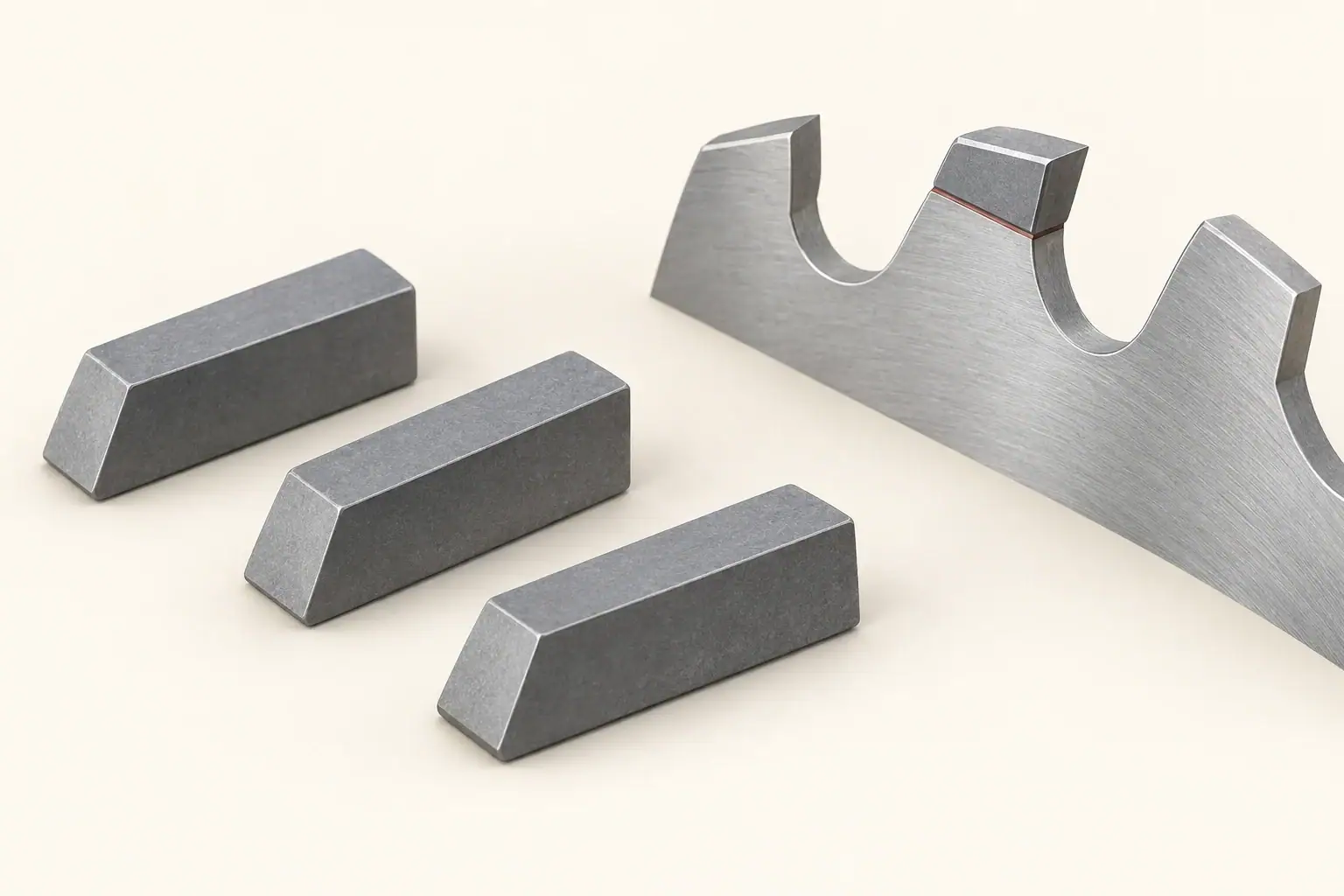
What the tip has to do
A saw tip is a cutting element incorporated into a blade during manufacturing or professional retipping. Blade construction, joining and final sharpening are separate stages, and the tip specification needs to account for the work your shop will perform. Tell us the required supplied condition and the dimensions or allowance your next operation expects. This page focuses on tip components; identify any additional scope in your inquiry.
Styles and how they are described
Saw-tip geometries include Style A, Style B, North American standard, left and right, V-top and hollow styles. A style name is a useful starting point, but a drawing or reference is the clearest way to communicate the exact profile. Ask about the form and grade combination your application requires; the quotation confirms the available scope.
- Style A, Style B and North American standard: include the size and drawing reference.
- Left- and right-hand styles: identify each required hand and quantity.
- V-top and hollow styles: show the top profile and relevant angles.
- Band saw tip inquiries: identify the cylinder, ball or other form required.
Matching the tip to the material
Woodworking applications include softwood, hardwood, chipboard, MDF and HDF. Sawmill and winter-wood applications add operating conditions that belong in the specification. For metal cutting carbide saw tips, identify the metal and its condition; carbide and cermet are separate material families. Include the current grade if known, plus wear or edge-damage issues you want the review to consider. A grade is confirmed against the requested application and supply scope.
What a quotation establishes
Length, width and thickness need units and the tolerances that matter to your process. Identify grinding allowance, edge condition and any joining or surface-treatment requirements instead of relying on a style name alone. A marked-up drawing helps separate the dimensions of the tip as supplied from the geometry after your final sharpening. Include the order quantity and desired delivery date; pricing, availability and timing are confirmed through the quotation.
A clearer drawing makes a better request
What to include in your RFQ
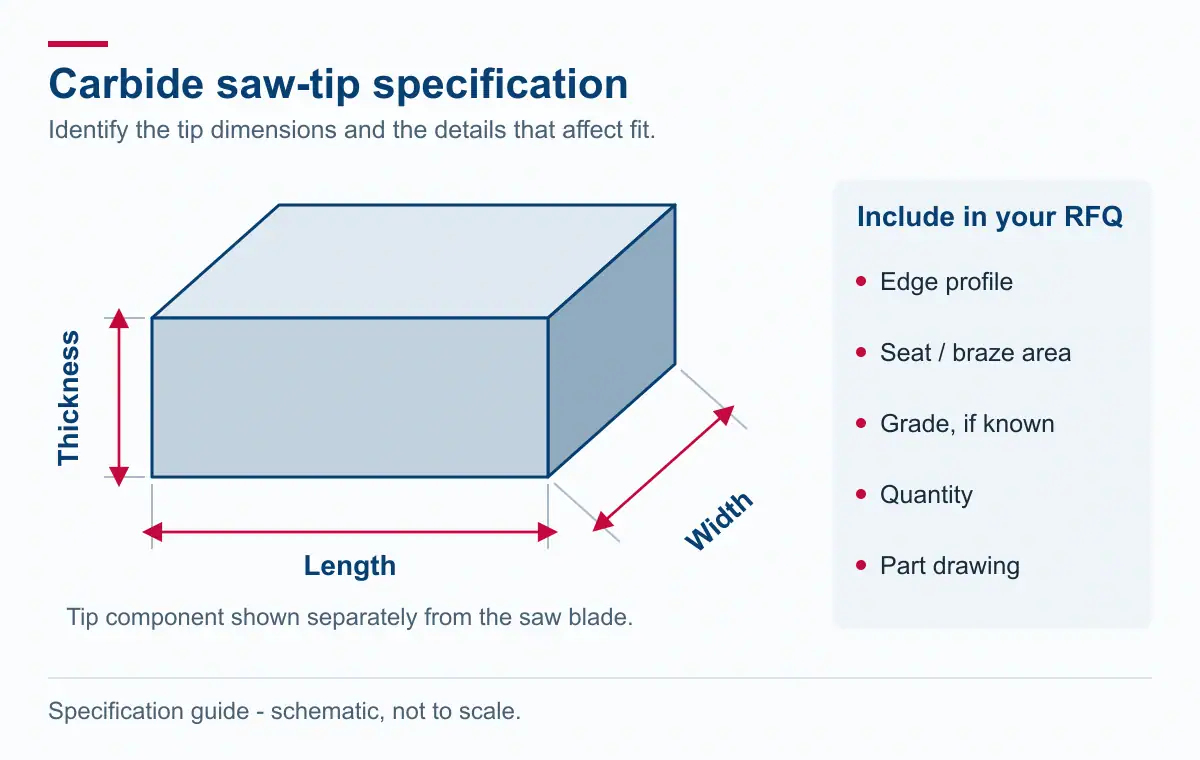
- Material being cut and typical running conditions
- Tip style or drawing reference
- Length, width and thickness with units
- Tolerances and grinding allowance
- Finish and joining requirements on your side
- Current grade, if you use one
- Quantity and the delivery you are planning for
You do not need every detail to get started. Technical requirements stay optional on the inquiry form.
Questions before you order
What should I provide for replacement carbide saw teeth?
A current drawing, tip reference or clear description helps establish the replacement requirement. Include dimensions with units, the material being cut, the existing grade if known and the quantity. A replacement request is reviewed against the blade and tip specification; a similar outline alone does not establish a match.
Can I inquire about a nonstandard tip style or size?
Yes. Send the drawing or dimensions, the material being cut and the style or profile you need. Nonstandard sizes and grades are handled as specification inquiries. The quotation confirms which geometry, supplied condition and material can be offered for the requested part.
What happens after you submit
Review the requirement
Extramet reviews the part, drawing, application and quantity with its supply partner.
Confirm the details
Open questions about grade, geometry, finishing and sample needs are clarified.
Confirm quote terms
Supply, minimum quantity, pricing, documentation and timing are confirmed for the specific request.
Have a drawing or a part to discuss?
Send your requirements for a quote review, or contact the team with an application question.
Helpful next steps: All carbide products · Grade selection · Machining and finishing