
Seal face components for pump builders and seal shops
Start with your ring drawing.
Request tungsten carbide seal rings for rotating or stationary mechanical seal faces. Send Extramet your ring drawing, process conditions and required supplied condition. Whether you need a blank for further finishing or a finished component, the geometry, material and supply scope are reviewed for the specific ring.
Start with your name and email. Drawing upload is optional.
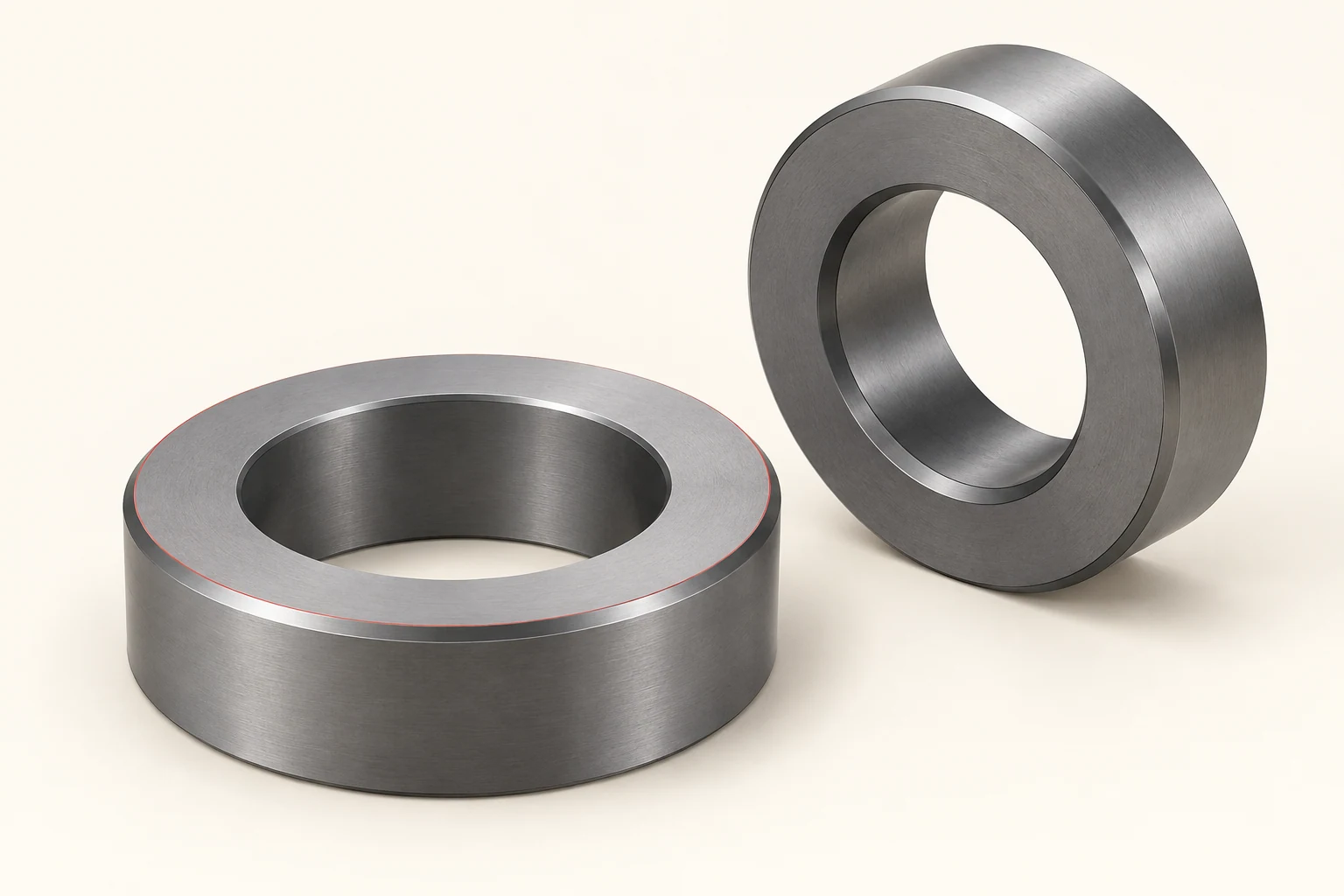
Rotating and stationary rings
Identify the ring’s role as well as its outline. The drawing should show how it is supported or driven, the locating surfaces and any anti-rotation or other profile features. A section view is especially useful when grooves, shoulders or a shaped back face affect the fit.
- Rotating ring: rotates with the shaft as part of the seal design.
- Stationary ring: remains fixed relative to the housing.
- Profile details: specify grooves, shoulders or toothed features on the drawing.
Where these rings run
Application examples include wastewater pumps, mine dewatering pumps, centrifugal pumps, centrifuges and slurry pumps. Suitability depends on the particular duty. Fluid chemistry, abrasive solids, temperature, pressure, speed and the mating face material all help define the review. Include the process fluid and operating range, even when you already have a part drawing. Carbide grade and binder selection need to account for that environment.
What the drawing has to settle
Outside diameter, inside diameter and thickness with units start the specification, and the rest follows from how the ring is used: section or profile, grooves, face finish and flatness, and the grade or binder if your seal design already names one. Whether a given ring can be supplied finished or as a blank for your own finishing is reviewed per inquiry, so say which condition you need.
A face, within your assembly
A seal ring is one component in the complete sealing system. The assembly design, mating face, support hardware and operating conditions determine how it will perform. A ring drawing alone does not establish drop-in compatibility or an operating rating. Include the role and required supplied condition with your request, and identify any existing part reference. The quotation confirms the component scope, material, dimensional requirements and supply terms.
A clearer drawing makes a better request
What to include in your RFQ
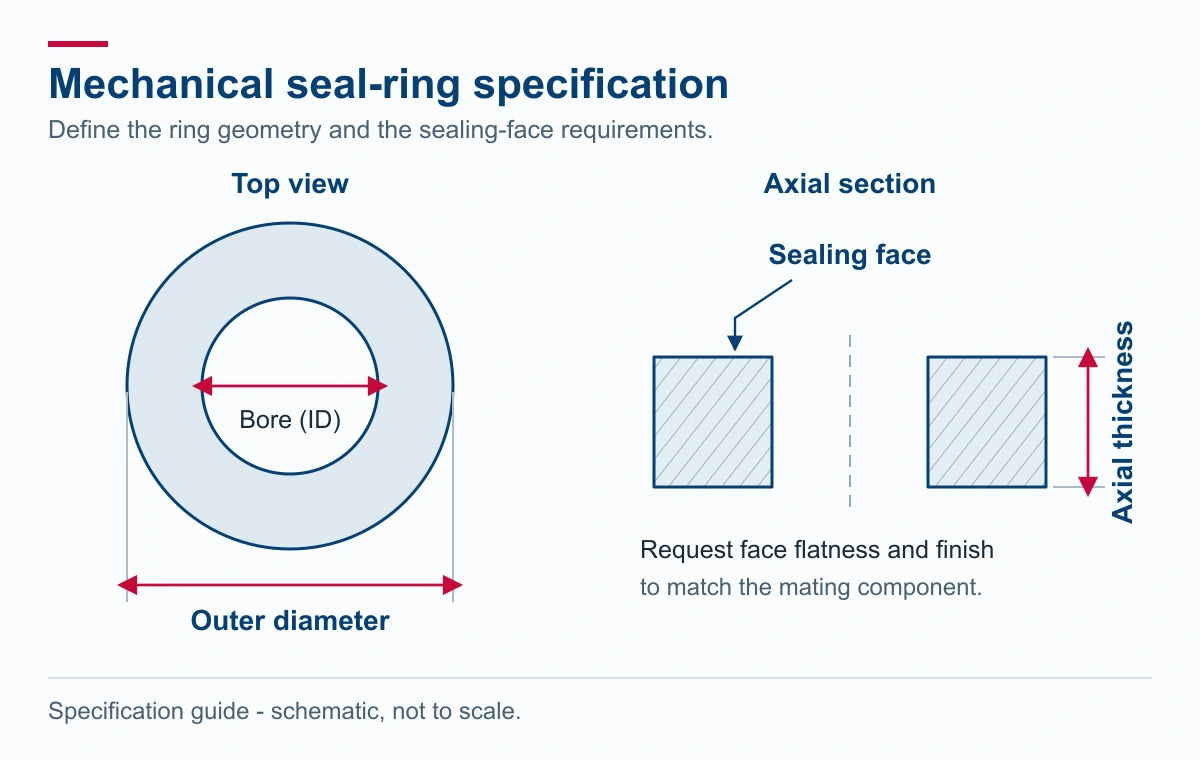
- OD, ID and thickness with units
- Drawing, tolerances and section or profile detail
- Rotating or stationary role, plus grooves or other features
- Face finish, flatness and required supplied condition
- Process fluid and abrasive solids
- Temperature, pressure, speed and mating face material
- Grade or binder if specified
- Quantity and desired delivery date
You do not need every detail to get started. Technical requirements stay optional on the inquiry form.
Questions before you order
Can rings be supplied finished, or only as blanks?
State whether you need a blank for further processing or a finished component. Include the drawing, tolerances, face finish and flatness requirements. The requested condition is reviewed for the specific ring, and the quotation confirms what can be offered.
Do I still need to give process conditions if my drawing is complete?
Include the operating conditions you know. A drawing defines geometry, while fluid chemistry, abrasive solids, temperature, pressure, speed and the mating face material inform the material review. If a grade or binder is already specified, include that reference as well.
What happens after you submit
Review the requirement
Extramet reviews the part, drawing, application and quantity with its supply partner.
Confirm the details
Open questions about grade, geometry, finishing and sample needs are clarified.
Confirm quote terms
Supply, minimum quantity, pricing, documentation and timing are confirmed for the specific request.
Have a drawing or a part to discuss?
Send your requirements for a quote review, or contact the team with an application question.
Helpful next steps: All carbide products · Grade selection · Machining and finishing