
Carbide blanks for drawing die manufacture
Specify your die-making blank.
Request carbide wire drawing die nibs for your die-making requirements. Send Extramet your nib drawing, blank dimensions or current specification, plus the drawn material and quantity. Identify where your own finishing begins so the core opening, allowance and required supplied condition can be reviewed as part of the quotation.
Start with your name and email. Drawing upload is optional.
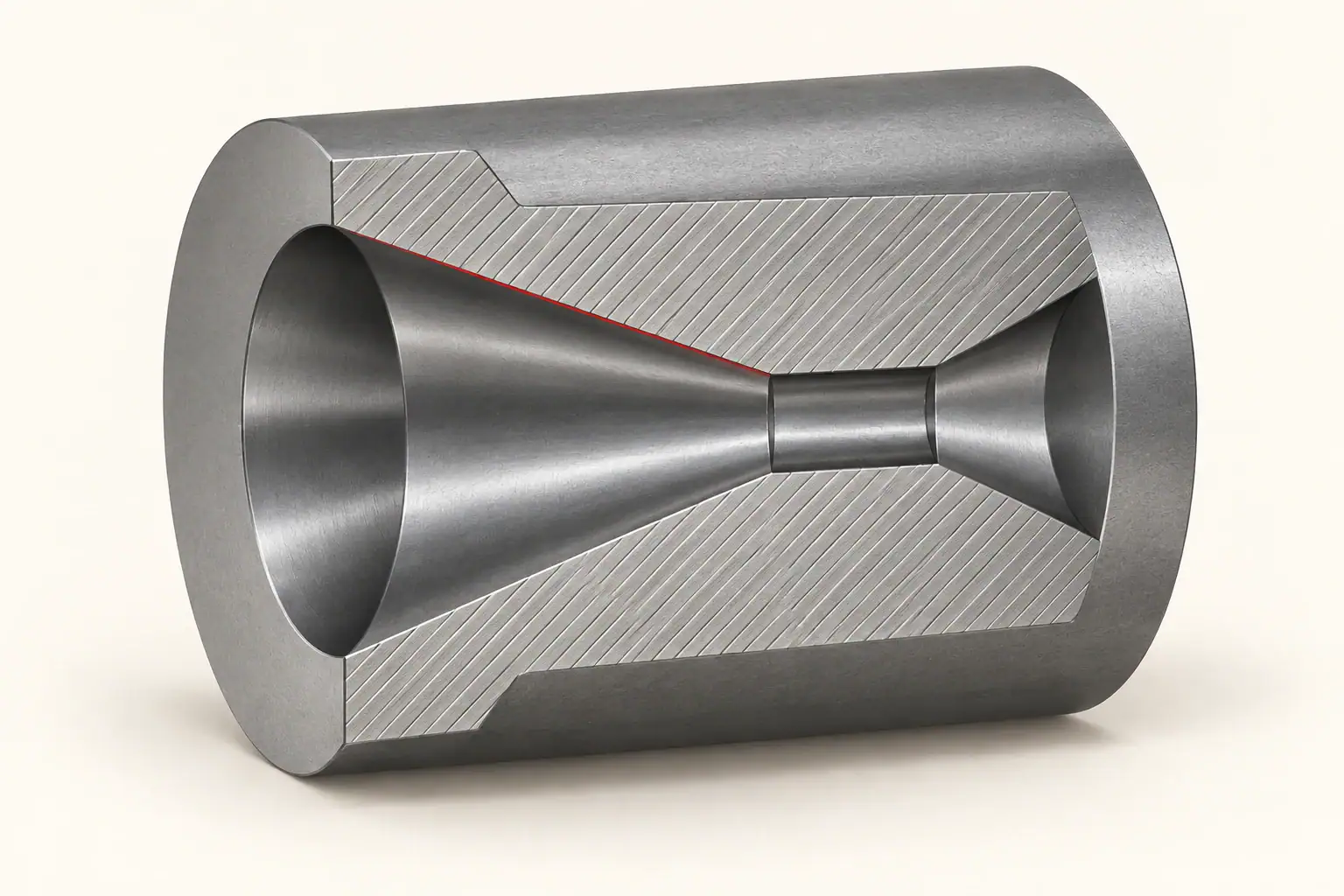
Where the nib sits in the die
A wire drawing die combines the working element with the geometry and support needed for its drawing operation. The carbide nib is the material component that a die maker incorporates and finishes for that design. Define the nib requirement separately from the final die specification: outside dimensions, core opening, internal profile and finishing allowance can describe different stages of the part. That distinction helps a quotation address the work you need supplied.
Supplied condition drives the specification
The required supplied condition depends on where your finishing work begins. Describe which surfaces need to meet a dimension on receipt and which will be finished by your operation. Identify any core or pilot opening, internal profile and stock allowance shown on the drawing. Supply options are reviewed for the individual nib; a familiar series name or reference part alone does not confirm the finishing condition.
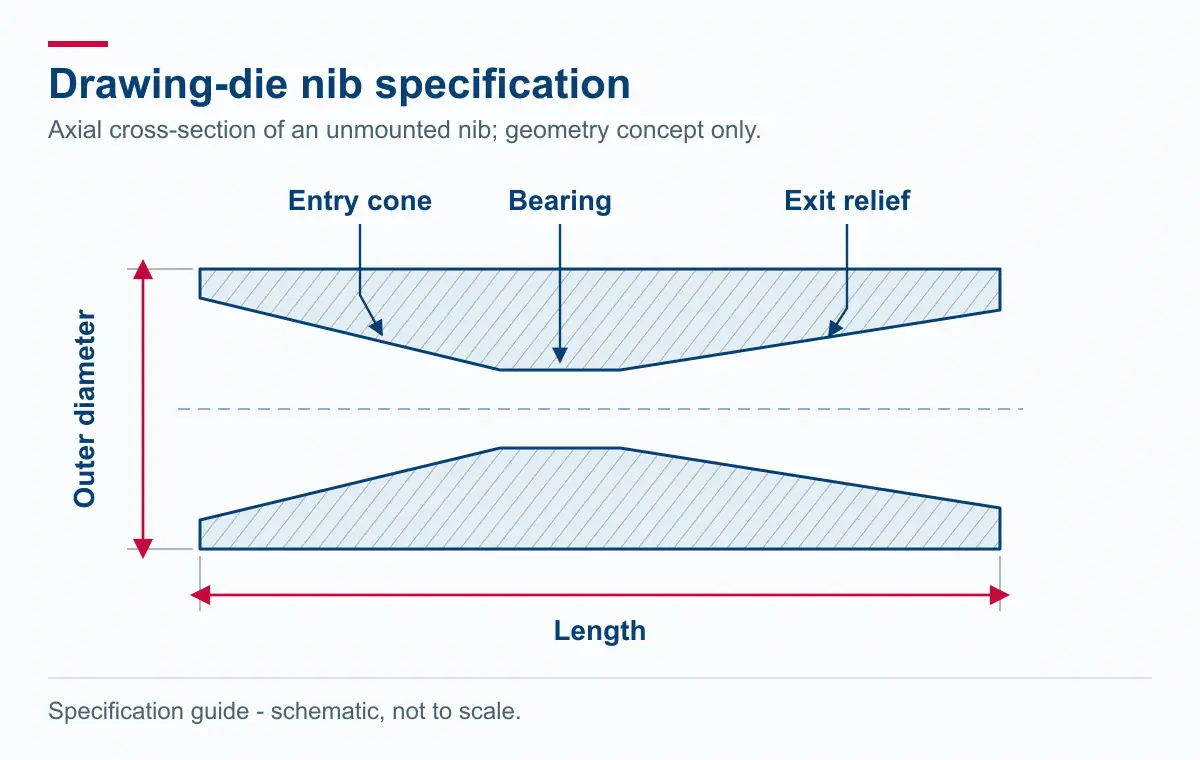
Use the wire drawing die geometry guide to distinguish the entry, reduction zone, bearing and exit. State the angle convention and separate the final die profile from the dimensions and condition required on receipt.
Drawn material and wire sizes
Wire drawing applications span ferrous and nonferrous materials. Identify the specific alloy and condition being drawn rather than only a broad metal family. Include the entry and exit wire sizes, plus relevant speed and lubrication information if known. For example, an inquiry for steel, copper or aluminum wire should still identify the actual material specification. These details support application review without assuming one nib grade or geometry fits every drawing operation.
What to send for a quotation
A drawing number and revision help keep the RFQ tied to the correct part. Start with outer diameter and length, then identify the core or pilot opening and any internal profile already specified. Show units, tolerances and the dimensions that apply to the blank as supplied. List finishing allowance separately from the finished bore or die requirement. Add the carbide grade or binder if specified, the quantity and desired timing.
A clearer drawing makes a better request
What to include in your RFQ
- Drawing number and revision, if you have one
- Outer diameter and length with units
- Core or pilot opening and internal profile
- Blank or finished dimensions, and allowance
- Required supplied condition
- Drawn material grade and wire sizes
- Grade or binder if your die design specifies one
- Quantity and timing
You do not need every detail to get started. Technical requirements stay optional on the inquiry form.
Questions before you order
Is a nib the same as a finished wire drawing die?
A nib is the carbide working blank used to produce the die. Final bore geometry, surface finishing and housing integration belong to the finished die design. This page focuses on nib requirements, so identify the supplied condition and where your own finishing operations begin.
What if the internal profile is not decided yet?
Send the requirements that are fixed, such as outside dimensions, the drawn material and intended wire sizes. Identify the profile or allowance that is still open. Those details start the discussion; the agreed nib drawing and quotation must establish the scope before an order proceeds.
What happens after you submit
Review the requirement
Extramet reviews the part, drawing, application and quantity with its supply partner.
Confirm the details
Open questions about grade, geometry, finishing and sample needs are clarified.
Confirm quote terms
Supply, minimum quantity, pricing, documentation and timing are confirmed for the specific request.
Have a drawing or a part to discuss?
Send your requirements for a quote review, or contact the team with an application question.
Helpful next steps: All carbide products · Grade selection · Machining and finishing