Compare domestic and offshore carbide sourcing at the same acceptance point. Location alone does not establish quality, material origin, process ownership or the real cost of keeping production supplied.
For a sourcing review, contact Extramet Products with the scope of material supply, finishing and inspection you need.
A landed-cost worksheet without hidden assumptions
| Cost or risk input | What to record for each quote |
|---|---|
| Component price | Same drawing, grade, quantity and supplied condition |
| Freight and border costs | Actual quoted route and applicable charges |
| Remaining processing | Finishing and inspection excluded from the supplier price |
| Inventory buffer | Extra stock required by replenishment timing |
| Quality response | How returns, replacements and corrective action are handled |
Illustrative arithmetic: an order priced at USD 2,000 with USD 150 freight and USD 200 additional inspection totals USD 2,350 before any other applicable charges. Dividing by 100 accepted parts gives USD 23.50 per part. These assumed costs are not current supplier pricing, tariff advice or a market comparison.
Test the replenishment scenario
Ask what happens if ten parts are rejected or demand rises unexpectedly. Compare the documented replacement process and current delivery commitment, not a general promise of responsiveness. Include the cash tied up in buffer stock when it materially changes the purchasing decision.
A supplier based in the United States may use internationally produced material. Confirm the quoted material origin separately whenever the drawing, customer or procurement rules require it.
For Extramet’s scope, review the carbide manufacturing capabilities in Latrobe. The on-site grinding, machining and inspection work is identified separately from upstream powder preparation, pressing and sintering.
The real sourcing comparison
A low part price is only one part of carbide sourcing. Lead time, technical support, inspection, traceability, communication, and corrective-action response all influence total cost.
When domestic support is valuable
Domestic support can be especially useful for custom blanks, tight-tolerance grinding, prototypes, regulated industries, and applications where grade selection is not yet settled.
How to compare suppliers fairly
Use the same drawing, grade, finish, inspection, and documentation package for each quote. If one quote includes finishing and another only includes raw stock, they are not equivalent.
Frequently Asked Questions
Is offshore carbide always lower quality?
No. Quality depends on the supplier, specifications, inspection, and process control.
Why choose domestic carbide support?
Domestic support can reduce communication delays and improve technical collaboration for custom or critical work.
What is the biggest comparison mistake?
Comparing raw piece price without including lead time, finishing, inspection, freight, and risk.
The manufacturer-versus-distributor guide helps identify who owns material supply, finishing and corrective action.
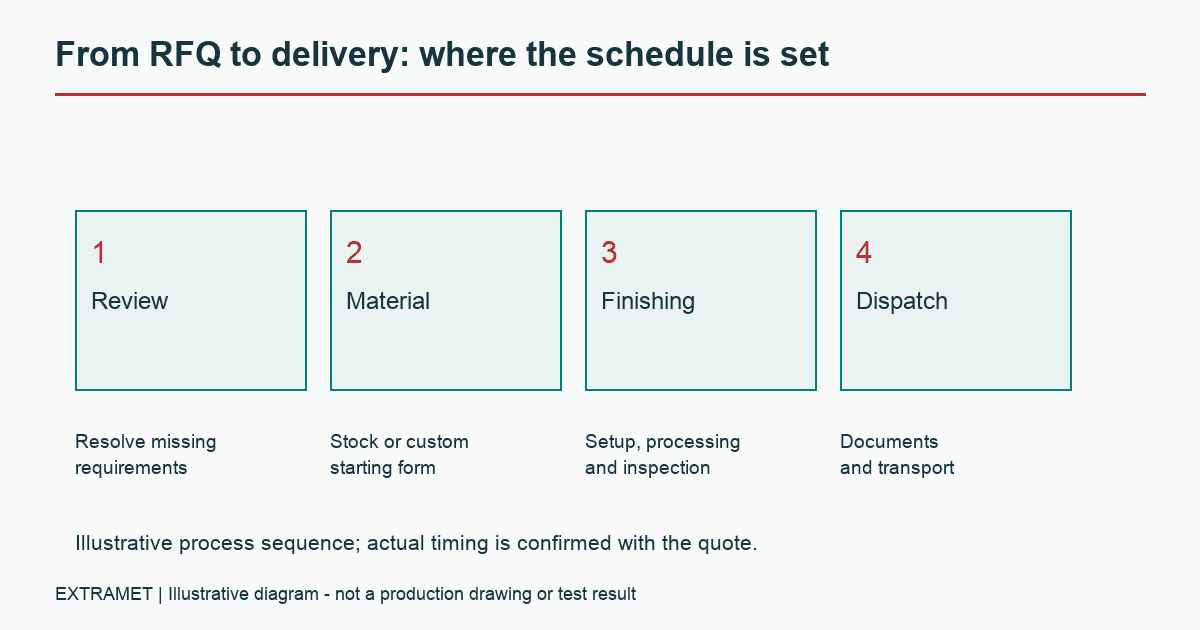
Review the carbide lead-time stages to identify approvals and operations that must be included in the delivery commitment.
Send the drawing, application and quantity through the RFQ form when the requirements are ready for review.
Product questions? Contact Michael Douglas, Extramet Products product expert and Sales and Marketing contact.