
Blank describes a starting condition, rod describes a shape, and tool blank describes an intended use. A rod can therefore also be a blank for a cutting tool. The purchase order needs more than one of these labels to identify the right product.
Use the carbide blank requirements to define the starting material and supplied condition.
Translate the form name into a purchase description
| Term | What it tells you | What still needs to be stated |
|---|---|---|
| Carbide blank | Material will receive more processing | Shape, grade, stock allowance and supply condition |
| Carbide rod | A cylindrical starting form | Diameter, length, straightness, ends and finish |
| Cutting tool blank | Starting material for a tool | Tool design, grade, dimensions and downstream process |
Three illustrative RFQ lines
General blank: rectangular carbide blank to drawing A, revision B; grade to be agreed; supplied oversize for customer grinding. Rod: 10 mm nominal OD x 100 mm length, with diameter and length limits attached. Tool blank: carbide rod for a custom reamer, finished blank drawing attached, grade and coating compatibility to be reviewed.
These are examples of wording, not available stock sizes. Each request still needs quantity, required date and inspection requirements. For a toolmaking project, start with the cutting-tool blank range; for shape and material yield, use the stock-form comparison below.
What is a carbide blank?
A carbide blank is a starting form that will be finished into a specific component. It may be round, rectangular, near-net, oversized for grinding, or made to a customer drawing. A blank is usually ordered because the buyer needs control over material, grade, size, and stock allowance before final processing.
For wear parts, a blank may eventually become a punch, pin, bushing, nozzle, guide, sleeve, or custom component. The blank does not need to look like the final part, but it should be close enough to support efficient finishing.
What is a carbide rod?
A carbide rod is a cylindrical stock form. Rods are often used when the finished part is round or when a shop needs a repeatable starting diameter for grinding or cutting. Rod stock can be supplied in different grades, lengths, and finish conditions depending on the application.
Extramet’s stock family, including tungsten carbide stock, can be useful when the requirement fits a standard or repeatable form. Custom blanks are better when geometry, size, or grade requirements move beyond stock.
What is a cutting tool blank?
A cutting tool blank is a carbide form intended to become an end mill, drill, reamer, burr, or another cutting tool. These blanks often need specific diameter control, straightness, grind allowance, and grade characteristics because the final tool geometry depends on consistent material behavior.
If the application is toolmaking, start with Extramet’s end mill and rotary cutting-tool blanks page. If the application is a wear component or custom industrial part, the broader carbide blanks page may be the better fit.
Specifications that reduce quote friction
A strong carbide blank RFQ should include the desired grade or performance requirement, shape, nominal dimensions, grind allowance, tolerance, finish, quantity, and final use. If the component will see sliding abrasion, impact, high pressure, heat, corrosion, or food-contact requirements, include those notes. They can influence grade selection and finishing recommendations.
Grade selection is especially important. Binder percentage, grain size, hardness, toughness, and corrosion resistance all change how a blank performs. If you are unsure where to start, review Extramet’s tungsten carbide grades before submitting the request.
The practical buying rule
Ask for the form that matches the work you need done next. If you need round stock for later grinding, describe rod or stock requirements. If you need a near-net starting shape for a wear component, describe the blank. If you are making cutting tools, specify cutting tool blank requirements.
When the print, grade, and application are ready, submit them through Extramet’s Request for Quote form so the team can review the best manufacturing path.
Compare carbide stock forms when shape, finishing access and material yield affect the starting blank.
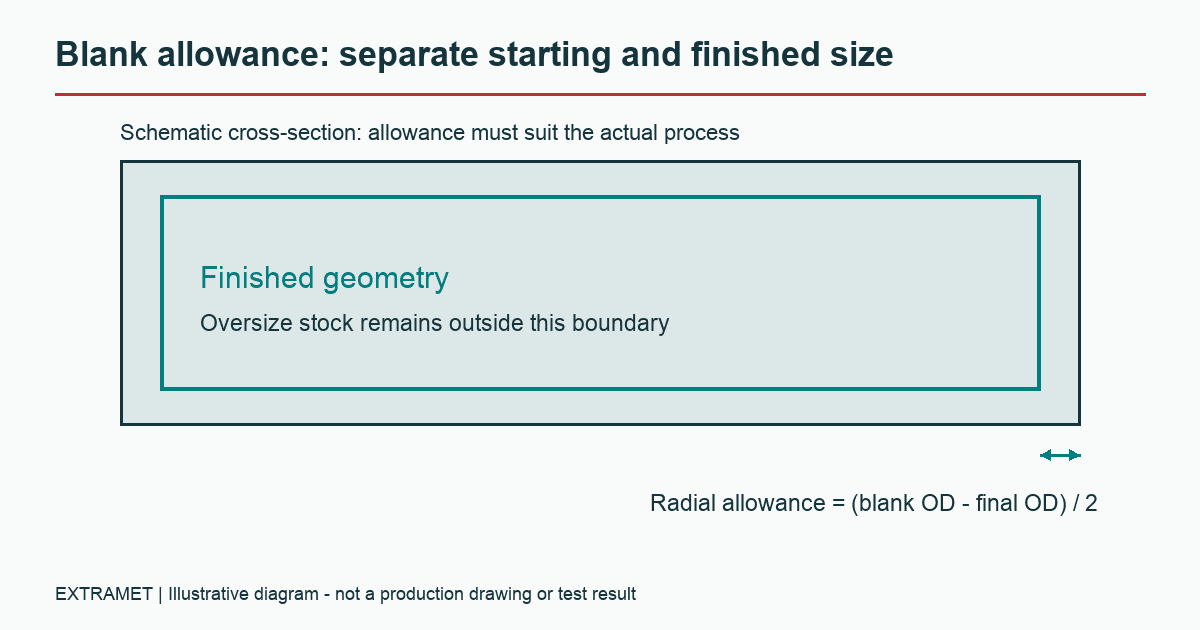
Check the grind-allowance example when starting dimensions and finished dimensions are different.
Product questions? Contact Michael Douglas, Extramet Products product expert and Sales and Marketing contact.