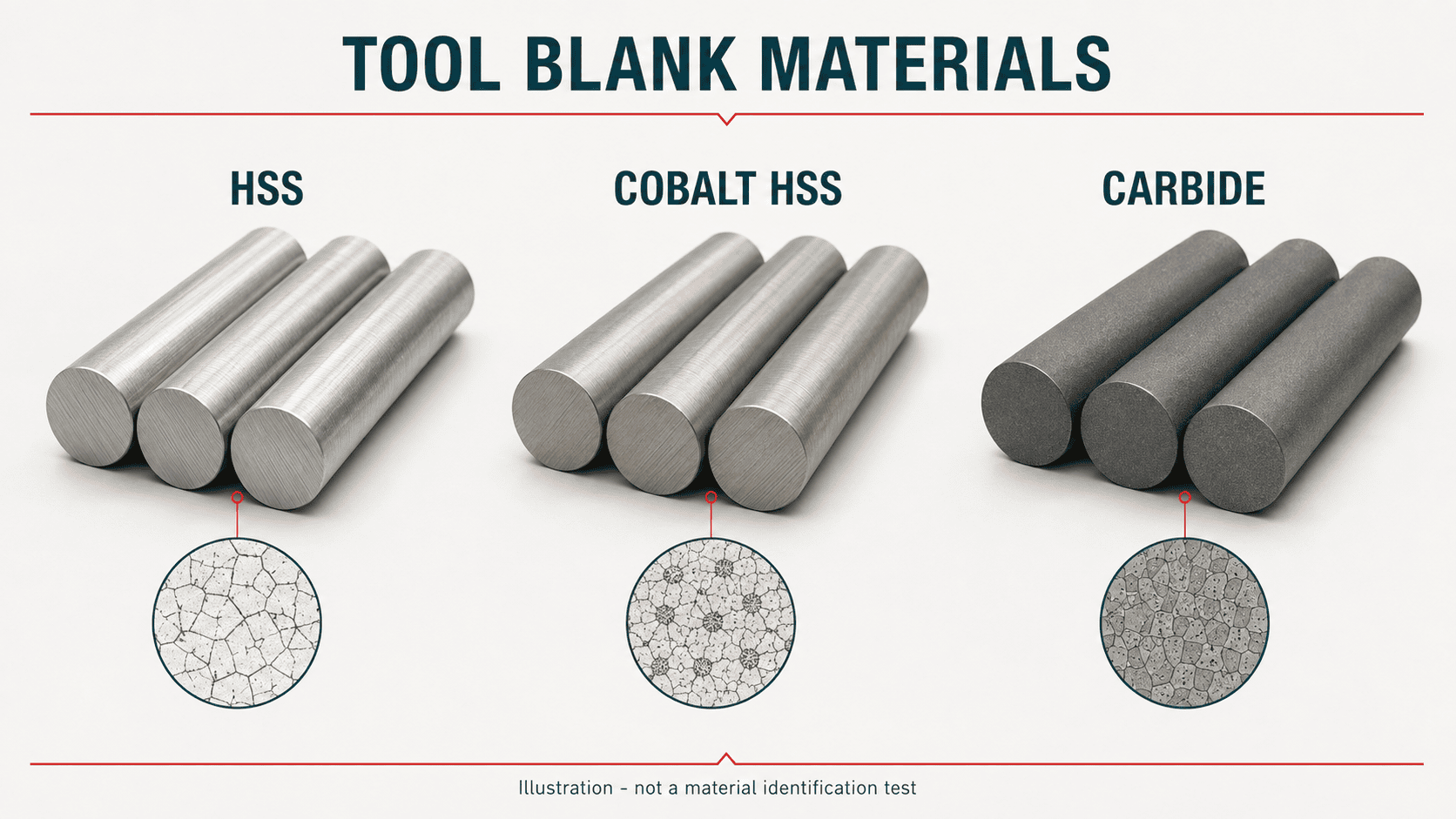
High-speed steel, cobalt-alloyed HSS and cemented carbide are different tool-substrate choices. Compare them using the cutting operation, setup and total tooling cost; cobalt-alloyed HSS is not the same material as the cobalt binder in a carbide grade.
Compare the three substrates in one place
| Substrate | When to investigate it | What to test |
|---|---|---|
| High-speed steel (HSS) | A forgiving baseline for tooling with cost, sharpening or interrupted-use constraints | Wear, edge condition and service cost under the actual cutting conditions |
| Cobalt-alloyed HSS | An HSS option when the specific steel grade offers the needed hot-hardness balance | Actual alloy grade, heat treatment and measured tool performance |
| Cemented carbide | A candidate where stiffness, edge retention or abrasive wear limits production | Carbide grade, geometry, support, edge preparation and finishing route |
There is no universal ranking that makes every cobalt-alloyed HSS tool a midpoint between ordinary HSS and carbide. Tool grade, heat treatment, geometry, coating and operating conditions affect the result. Compare documented substrates and controlled trials, not the word cobalt alone.
When a carbide blank is worth reviewing
Describe whether the present tool loses size, deflects, wears at the edge or requires frequent changes. Supply the tool geometry, work material, operation, setup and current service interval. Extramet’s cutting-tool blanks are the relevant starting point for a carbide toolmaking request.
Separate toolmaking from wear-part replacement
A blank for a reamer or end mill needs a downstream toolmaking plan. A steel guide or bushing being replaced for abrasion is a different application; use the wear-component requirements for that discussion.
Compare cost at the accepted-output level
Record blank cost, toolmaking, sharpening or regrinding, changeover time and acceptable output. If geometry or coating changes with the substrate, document those changes so a trial is not mistaken for a material-only experiment.
Frequently asked questions
Is HSS always inferior to carbide?
No. The operation, setup, tool grade and economics determine the useful choice. A more forgiving or easier-to-resharpen substrate may fit a particular application better.
Does cobalt-alloyed HSS contain carbide binder?
No. Cobalt is an alloying addition in that HSS material; cemented carbide uses a metallic binder around carbide grains. They are different material systems.
What should I send for a carbide tool-blank quote?
Send the blank and tool requirements, proposed grade if known, dimensions, finish, quantity and intended operation. Identify which downstream processes are included or performed by the toolmaker.
The tool-blank drawing guide separates size limits, straightness, end condition and surface finish.
Use the grade-selection workflow to connect the application evidence with a documented material choice.
Send the drawing, application and quantity through the RFQ form when the requirements are ready for review.
Product questions? Contact Michael Douglas, Extramet Products product expert and Sales and Marketing contact.