
Specify surface finish as a measurable requirement on a named surface. Terms such as polished or smooth can help describe appearance, but they do not replace an agreed roughness parameter, units and inspection method.
Review the carbide machining and finishing options against the complete drawing.
An example finish note, with units
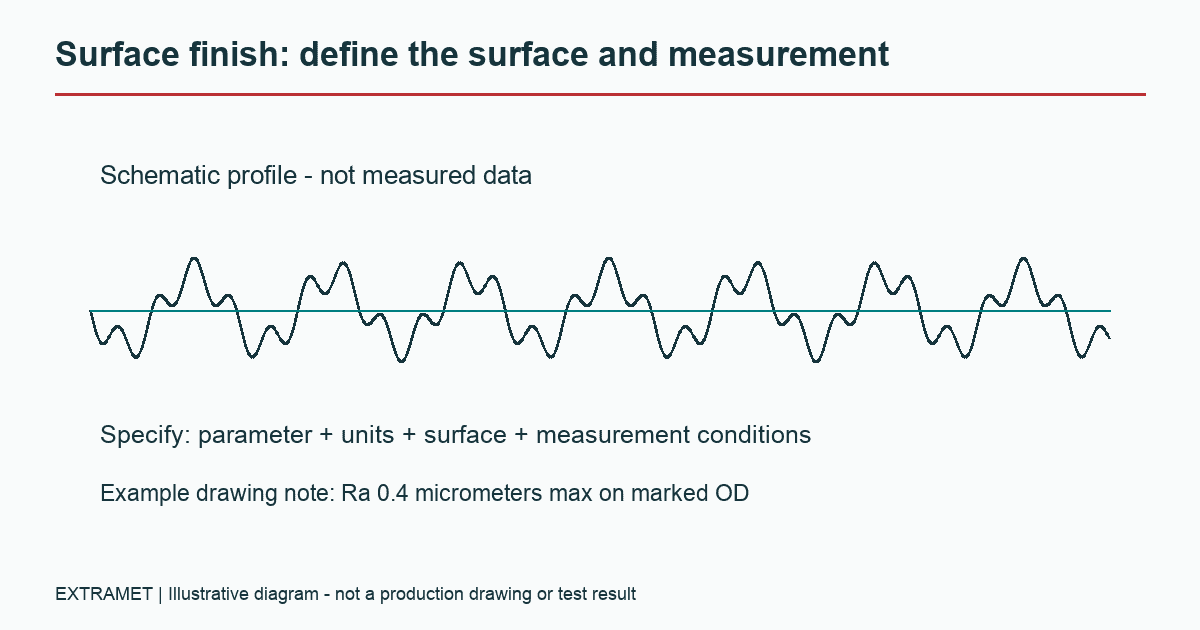
Illustrative drawing note: Ra 0.4 micrometers maximum on the marked OD. This is approximately 15.7 microinches. It is an example of wording and conversion, not a standard Extramet finish or a promise that every geometry can meet it.
| Include | Why it matters |
|---|---|
| Parameter and limit | Ra is not interchangeable with another roughness parameter |
| Units | Micrometers and microinches differ by about 39.37 |
| Marked surface | Different zones may have different functions |
| Measurement conditions | Direction, filtering and evaluation length affect interpretation |
| Other acceptance needs | Scratches, pits, edge condition and waviness may need separate limits |
Ra does not describe the entire surface
Ra summarizes profile deviations under the specified measurement conditions. Two surfaces can have a similar Ra and different peak shapes, lay or isolated defects. A sealing, sliding or locating application may therefore need more detail than one number.
Ask how the measurement direction relates to the machining lay and how the relevant standard will be applied. Do not infer a measured value from a photograph or from the word polish. The trace below is a schematic, not a measured Extramet sample.
Finish is functional
Surface finish is not just cosmetic on carbide. It can affect wear, friction, sliding behavior, sealing, cleaning, and how a part measures against mating components.
For mechanical seal rings, identify the functional face and specify flatness, surface finish and inspection requirements separately. Include the mating face material and service conditions with the drawing.
Do not bury finish in notes
A drawing should clearly identify which surfaces need which finish. If every surface is marked with a tight finish, grinding cost and inspection time can rise quickly.
Match finish to application
Pins, rods, punches, and wear components may need different finishes depending on contact pressure, speed, material, lubricant, and tolerance.
Frequently Asked Questions
Is polish finish always better?
Not always. It can add cost and may be unnecessary for non-critical surfaces.
Should finish be specified in Ra?
If finish is critical, an Ra value and measurement method are helpful.
Can finish affect wear life?
Yes. Finish can influence friction, heat, material transfer, and wear.
The OD tolerance and inspection guide distinguishes diameter limits from form and measurement requirements.
Compare EDM and diamond grinding when feature access and final surface integrity determine the process.
Send the drawing, application and quantity through the RFQ form when the requirements are ready for review.
Product questions? Contact Michael Douglas, Extramet Products product expert and Sales and Marketing contact.